Lo-fi’s slow, smooth beats aren’t just for studying and working. They represent the revenge of producers who have found a way to put their talent to good use in difficult times.
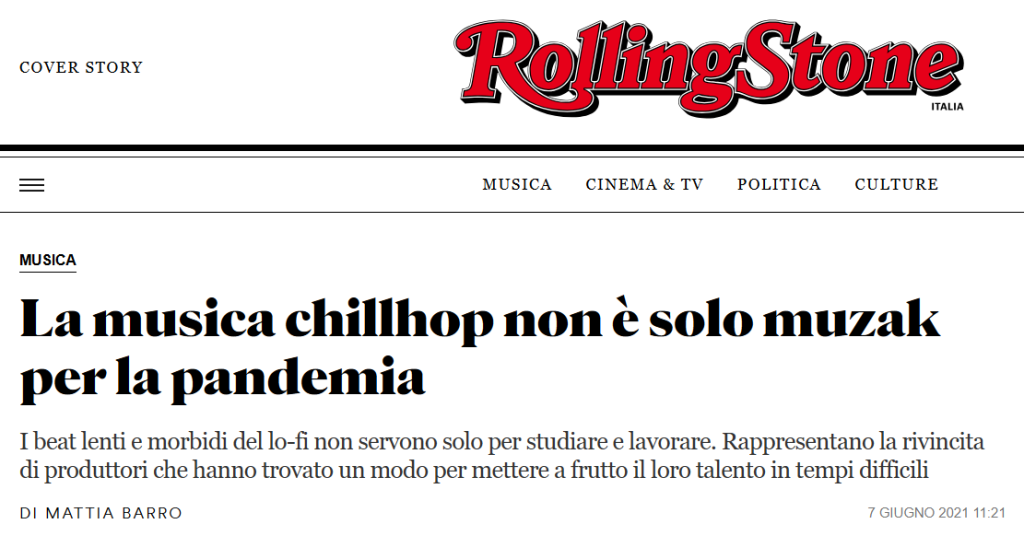
Back in June 2021, I had the chance to be featured in an article on Rolling Stone Italia that explored how lo-fi and chillhop music found their way into people’s lives during the pandemic. It was a thoughtful take — not just about the music itself, but about the people behind it, the culture around it, and why it resonated so deeply during that strange, still period in time. What I really appreciated was that it didn’t treat lo-fi as some internet fad or background noise — instead, it gave space to explore its emotional weight and its role in helping people feel grounded when everything else felt uncertain.
For me, being part of that conversation was special. Lo-fi has always felt like this quiet, communal undercurrent — a scene made up of people who often stay behind the curtain, making music that speaks without shouting. Having Rolling Stone shine a light on that was a big deal, especially because they approached it with genuine curiosity and respect. It reminded me that even though this genre often lives in the margins, its impact can still be felt far and wide.
I was asked about what it’s like to create within a genre that’s often underestimated — one that many have dismissed as “muzak” or background filler. And honestly, I get where that comes from. Lo-fi is subtle by nature. It doesn’t scream for attention. But just because it’s mellow doesn’t mean it’s mindless. Quite the opposite, actually.
In the interview, I talked about how lo-fi gave me (and many others) a way to stay creative without stepping into the spotlight. I’ve always loved the behind-the-scenes aspect of it — the quiet hours of digging through dusty samples, the layering of textures, the imperfections you leave in on purpose. It’s a kind of storytelling that doesn’t need lyrics. The vibes do the talking.
As I said in the piece:
“You don’t need to show your face. You don’t need to be a performer. You can sit in a corner, create, and still be a part of something.”
That’s a big part of why I’ve stuck with it. The lo-fi scene lets you be present in the music without constantly promoting yourself. You just… make stuff. And for me, that’s always been enough.

The article also featured Alsogood — a producer I deeply respect — and together, we shared the sentiment that this genre is more than just “beats to relax/study to.” Yes, it’s functional, but it’s also deeply emotional. It’s a canvas. Lo-fi often says the things words can’t. Especially during the lockdowns, when the world went quiet, this music filled a very particular void.
One point I really appreciated in the feature was how it acknowledged both the personal and professional side of being a lo-fi artist. We make this music because we love it, but for many of us, it’s also a way to sustain ourselves. I remember saying:
“At the end of the day, it’s a business too. But that doesn’t take away from the emotion behind it.”
Looking back now, I’m still honored to have been included. It was one of those moments that validated years of quiet work, beat after beat, release after release. It’s always wild to think that something you made alone in a small room can end up in a place like Rolling Stone.
And if you’re curious, you can check out the full Italian article here: https://www.rollingstone.it