Ads that have been identified as acceptable are those that abide by criteria specially developed for and by ad-filtering users. They are respectful, nonintrusive and relevant.
CATEGORY
Web Design, Branding, UI/UX
SKILLS
Art Direction, Design Systems, UI/UX, Branding
TOOLS
Pen & Papers, Sketch, Adobe Illustrator, Adobe Xd, Slack
Due to professional restrictions and / or the collaborative nature of these projects, specific research artifacts (e.g., user flows and interviews, heatmaps, internal documentation) cannot be shared; illustrative artifacts will be used instead. This case study focuses on design rationale, visual direction, and my role in the creative process.
1. Project Start
At the beginning of 2022, we were tasked with reimagining the digital presence of Acceptable Ads, a cross-industry initiative focused on better ad standards. The existing site leaned on imagery and photorealistic elements, but no longer reflected the evolving goals and tone of the initiative. The challenge was to make the platform more engaging, accessible, and forward-facing, especially to appeal to both users and stakeholders across different organizations. The direction was clear: shift toward a unified, illustration-based identity, with stricter color limitations and a modular, UX-friendly design language. Same with the overall rebranding of the company.
2. Research
The project involved more external voices than usual. While Eyeo was still a key player, Acceptable Ads also required close collaboration with stakeholders from outside organizations. Given the NDA constraints, I can’t share internal documents, user testing data, or stakeholder recordings, but research was shared internally via UX reviews and regular syncs.
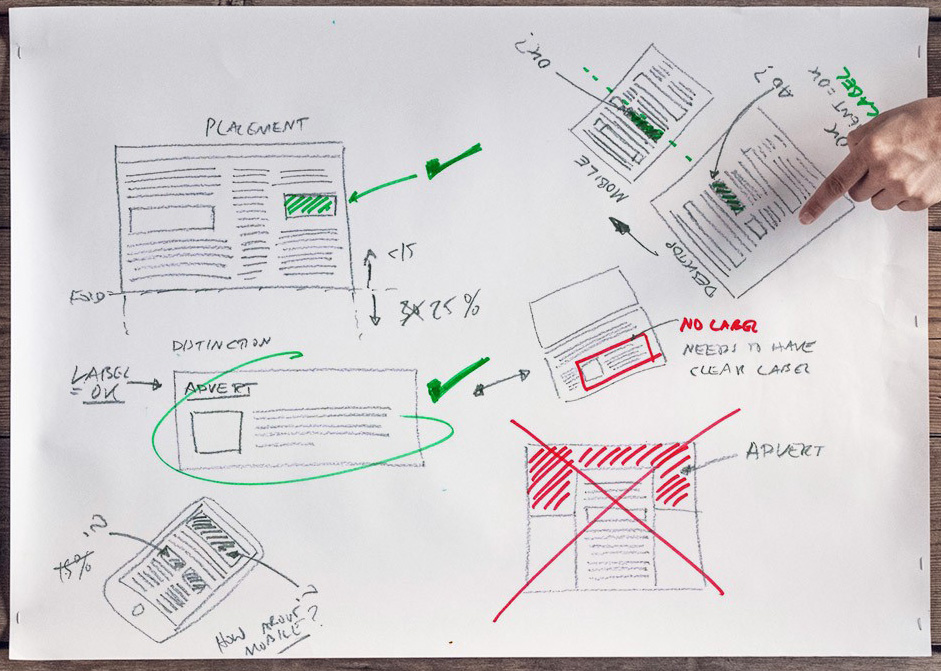
I worked closely with the UX researcher, content strategist, and product owner to identify weak points in the existing structure: unclear CTAs, inconsistent visual hierarchy, and overly formal tone that clashed with the initiative’s more user-first mission. Competitive audits and stakeholder input helped narrow our focus: simplify the architecture, increase visual clarity, and create stronger, purpose-driven visuals that could flex across formats and future needs.
UX Highlights
- Clearer IA through flatter navigation
- Reframed content tone for trust & simplicity
- Stakeholder alignment via modular components


brand UI references
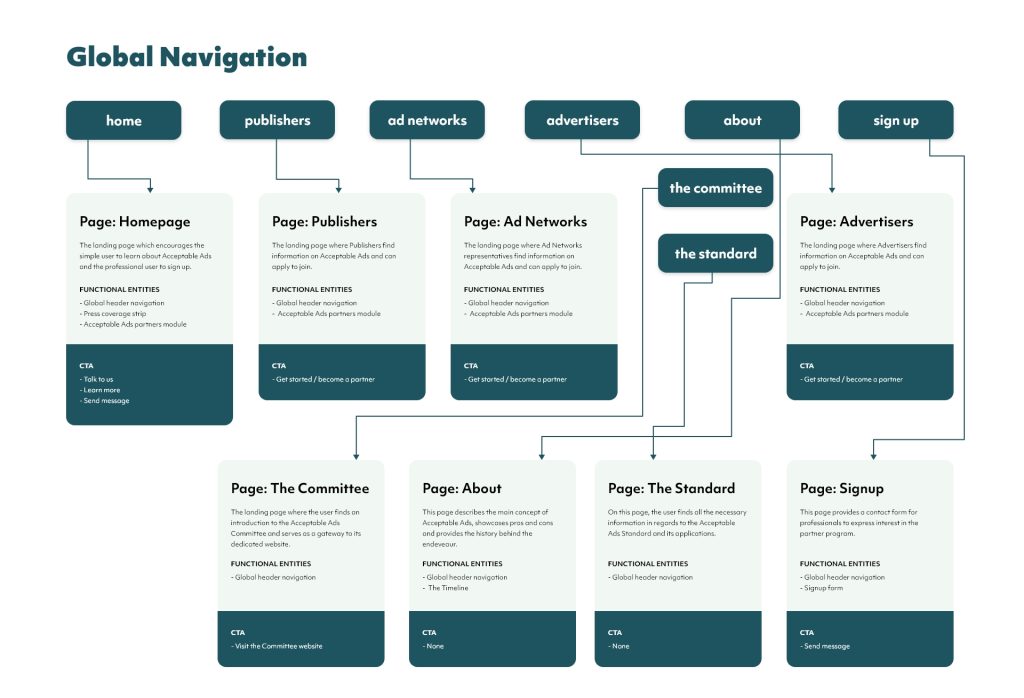
website ui navigation / user flow diagram
3. Ideation
With the rebrand of eyeo fresh in mind, we saw an opportunity to build a visual system that shared DNA with it—while still distinguishing Acceptable Ads as its own entity. I began exploring ways to break away from existing visuals and move toward metaphorical, abstract illustrations that spoke to fairness, transparency, and user respect. The key challenge was to represent something inherently conceptual—”acceptable advertising”—without falling back on clichés.
Initial sketches played with organic forms, rounded shapes, and neutral icons to convey neutrality, accessibility, and flow. Some ideas took cues from legal documents, while others leaned into browser metaphors. Once the direction started to crystallize, we shifted toward medium-fidelity wireframes and explored how modular layouts could streamline updates across the site.
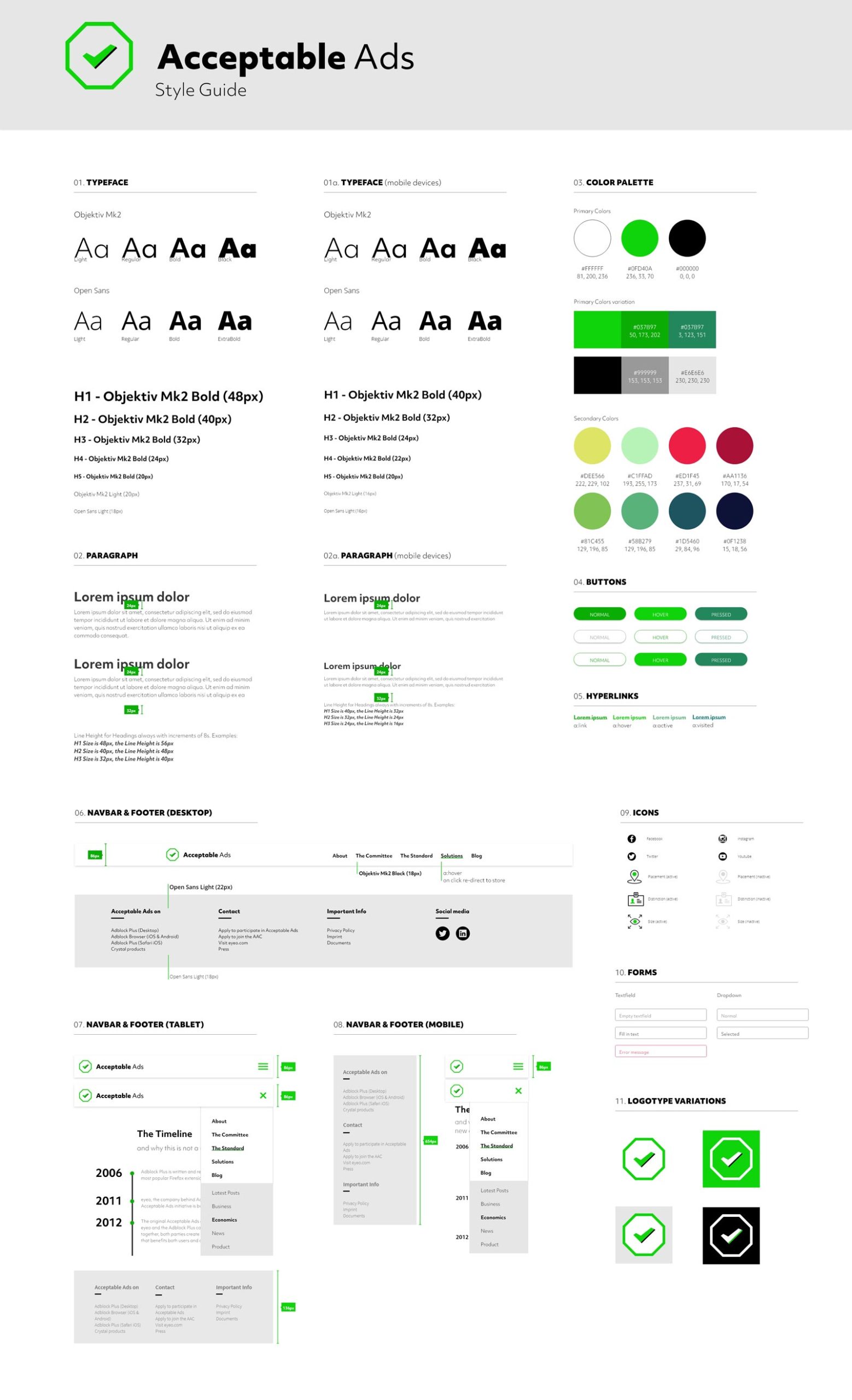
style guide / ui elements
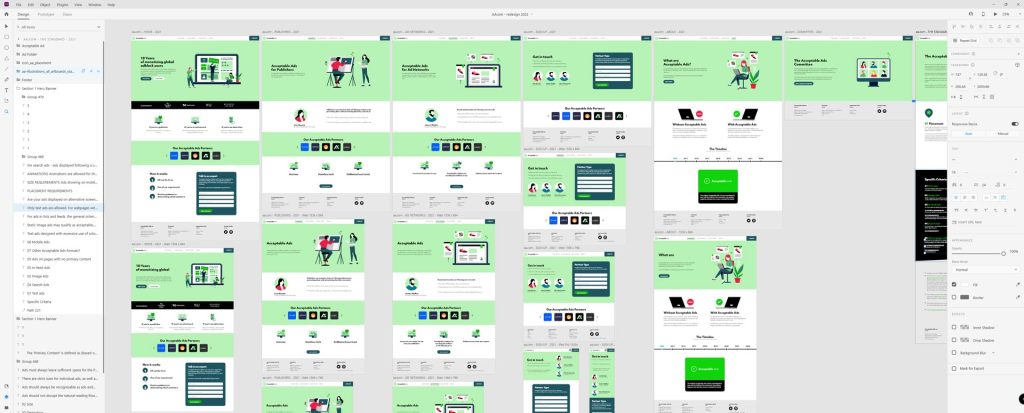
ui variations / working space
4. Concepts
We quickly locked into a strict four-color palette that echoed the Eyeo system while keeping Acceptable Ads distinct. The illustrative system was built using minimal lines and clear contrast—no gradients or photographic assets—to maintain visual consistency and accessibility.
Design Decisions Narrative Highlights
- Replaced existing hero visuals with symbolic, theme-based illustrations
- Used color blocks and micro-interactions to guide user flow without overwhelming them
- Built reusable components for scalability and team handoff
I explored multiple paradigms for how illustration and copy could work together across pages: from playful hero sections to subdued explainer layouts. Modular mockups helped us stress-test layouts across viewports and component combinations. Some elements required compromise between design purity and content complexity, but we always prioritized clarity over flair.


UX Thinking in Action
From the outset, the goal was to balance simplicity with clarity across a multi-stakeholder platform. We streamlined the information architecture to support quicker user journeys while building modular layouts for future scalability. Given the conceptual nature of Acceptable Ads, visual storytelling played a key role—using clean illustrations and limited color to guide attention and reduce noise. Accessibility, trust, and user empowerment were the core principles shaping both structure and visuals.
5. IMPLEMENTATION & DELIVERY
The final result is a lean, focused site that reflects the principles of the Acceptable Ads initiative through visuals as much as messaging. Illustrations tell the story of user empowerment and responsible ad practices without clutter or jargon. The typography system, spacing rhythm, and UI components were refined to maintain legibility across screen sizes.
Each page was designed with multiple personas in mind: advertisers, browser partners, and ad-filtering users. Every element—from CTAs to footers—was built to reinforce transparency and simplicity.
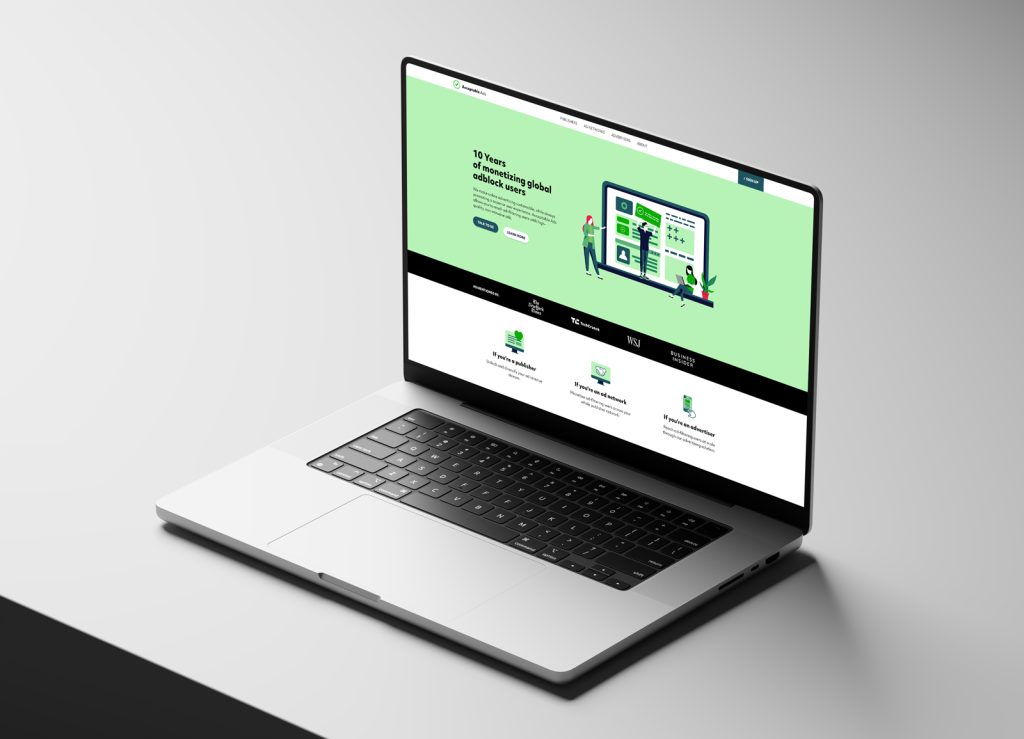
We retained familiar structural patterns from the previous design to preserve user continuity, while upgrading the visual language through dynamic illustrations and focused color segments.
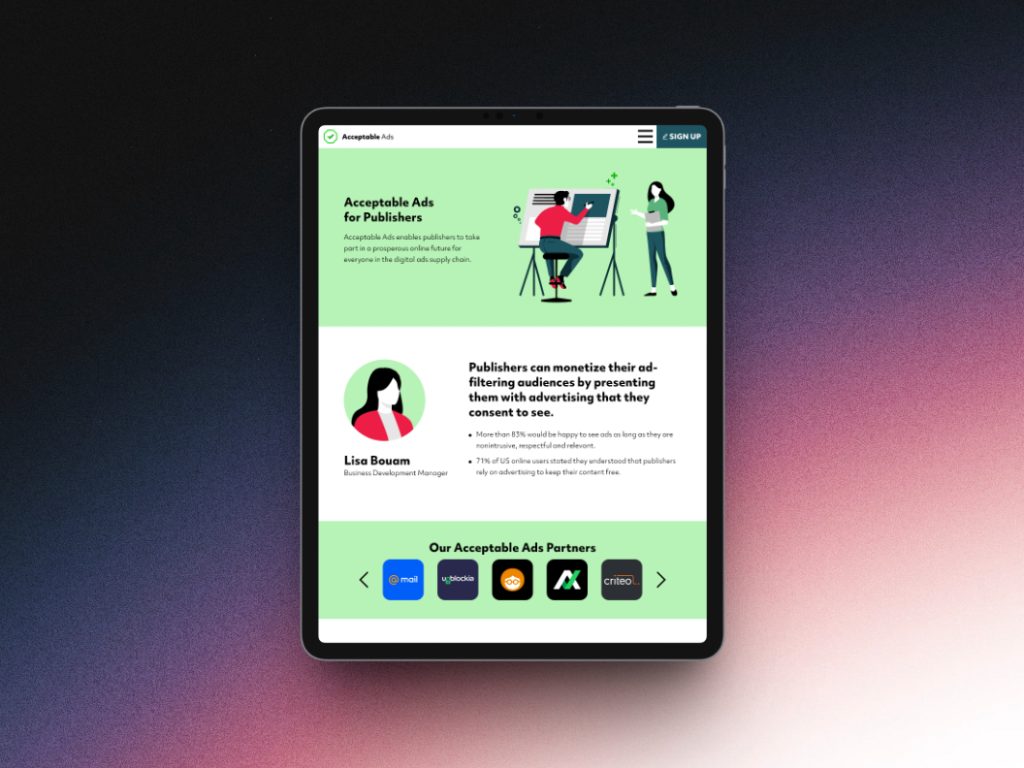
The restricted color palette and modular components were intentional design choices, ensuring consistency across subpages, outreach campaigns, and third-party communications.
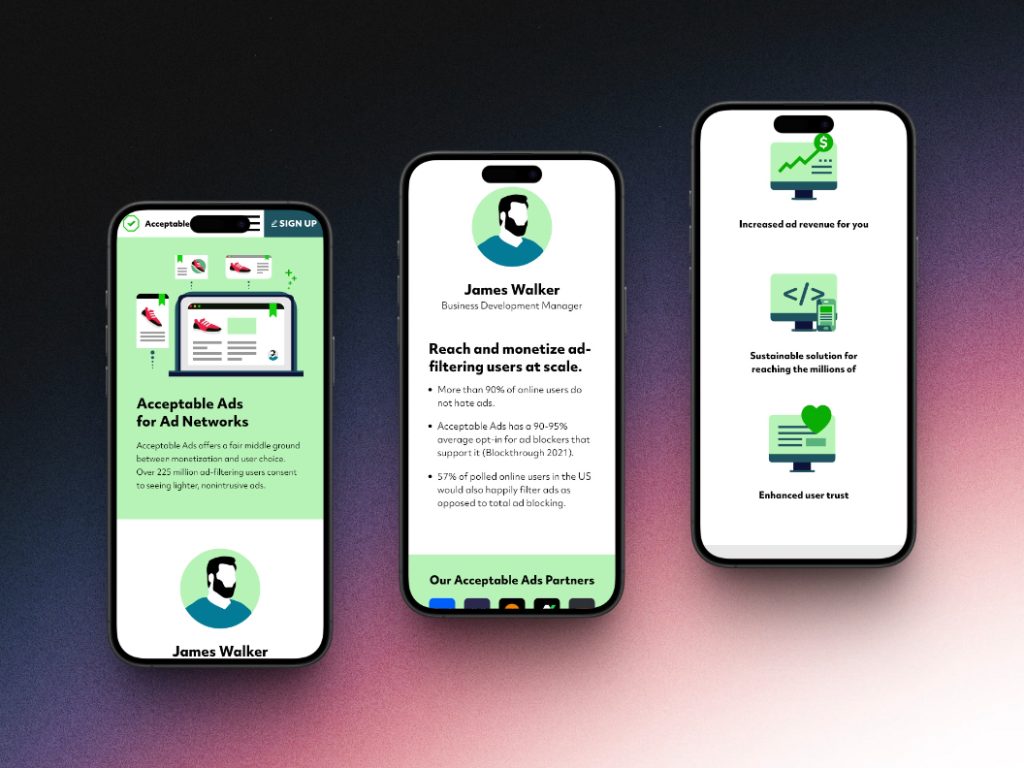
Every illustration was crafted to do more than just decorate — it served as a visual anchor to simplify complex ideas and policies around acceptable advertising, making them easier to grasp at a glance.
6. Retrospective
This project reaffirmed the importance of patience, especially when dealing with multi-party decision-making. The direction came from Eyeo, but execution required coordination with voices across legal, design, and external orgs. While we had to navigate NDA constraints and content ownership limitations, the collaborative spirit remained strong.
As the lead designer, I ensured cohesion across every visual touchpoint. While I couldn’t showcase user testing materials, I grounded my decisions in prior user feedback from the Eyeo redesign and in structured UX reviews held within the team.
If anything, this project taught me how to push strong visual narratives forward—even when artifacts like heatmaps and interviews can’t be shown.
UX Highlights
- Modular, reusable layouts for flexibility across stakeholders
- Accessibility-first illustration system
- Cross-functional buy-in achieved through visual clarity